Research

My research background

My research directions

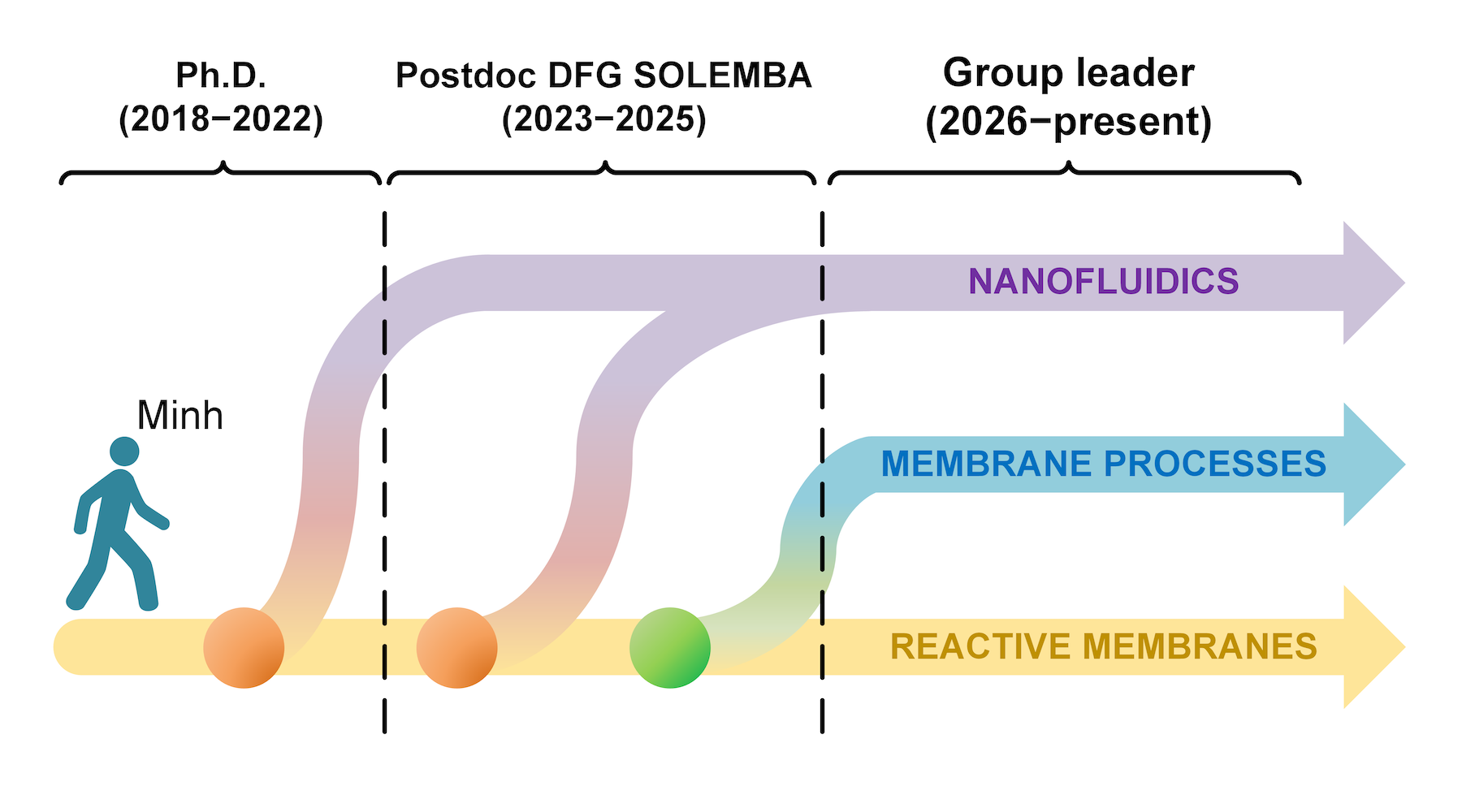
I conducted my Ph.D. study from 2018 to 2022 under the guidance of Prof. Andrea I. Schäfer to investigate the physical interactions between steroid hormone micropollutants and composite membranes that contain carbon-based nano-adsorbents.

From October 2022 to December 2025, I carried out postdoctoral-level research in the same group under a funded DFG grant (SOLEMBA), expanding my work to chemical reactions in photocatalytic membrane reactors.

During my Ph.D. and postdoc studies, Prof. Schäfer and I have published together several key papers on the fundamental interactions in nanopores. Below are two examples.

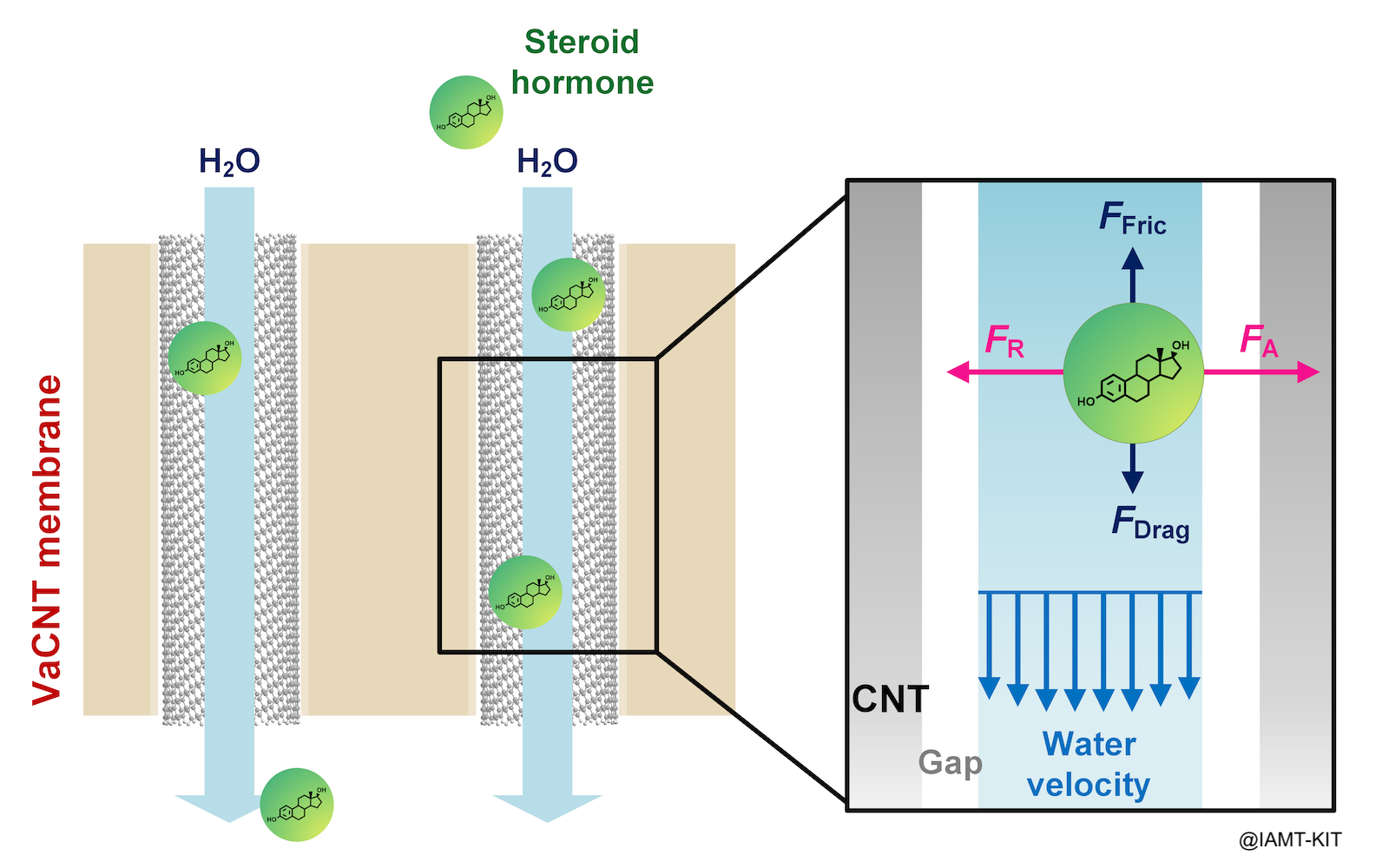
In small pores (below 10 nm in diameter), micropollutants readily interact with the pore walls due to the short separation distances. We revealed that micropollutant ‘adsorption’ (the more accurate word may be stagnation or dampening) is governed by an interplay of the hydrodynamic, adhesive/repulsive, and friction forces acting on the micropollutant molecule. This revelation cannot be achieved with common membranes, but requires the vertically-aligned carbon nanotube (VaCNT) membranes with minimized variability in pore roughness, tortuosity, and chemistry.

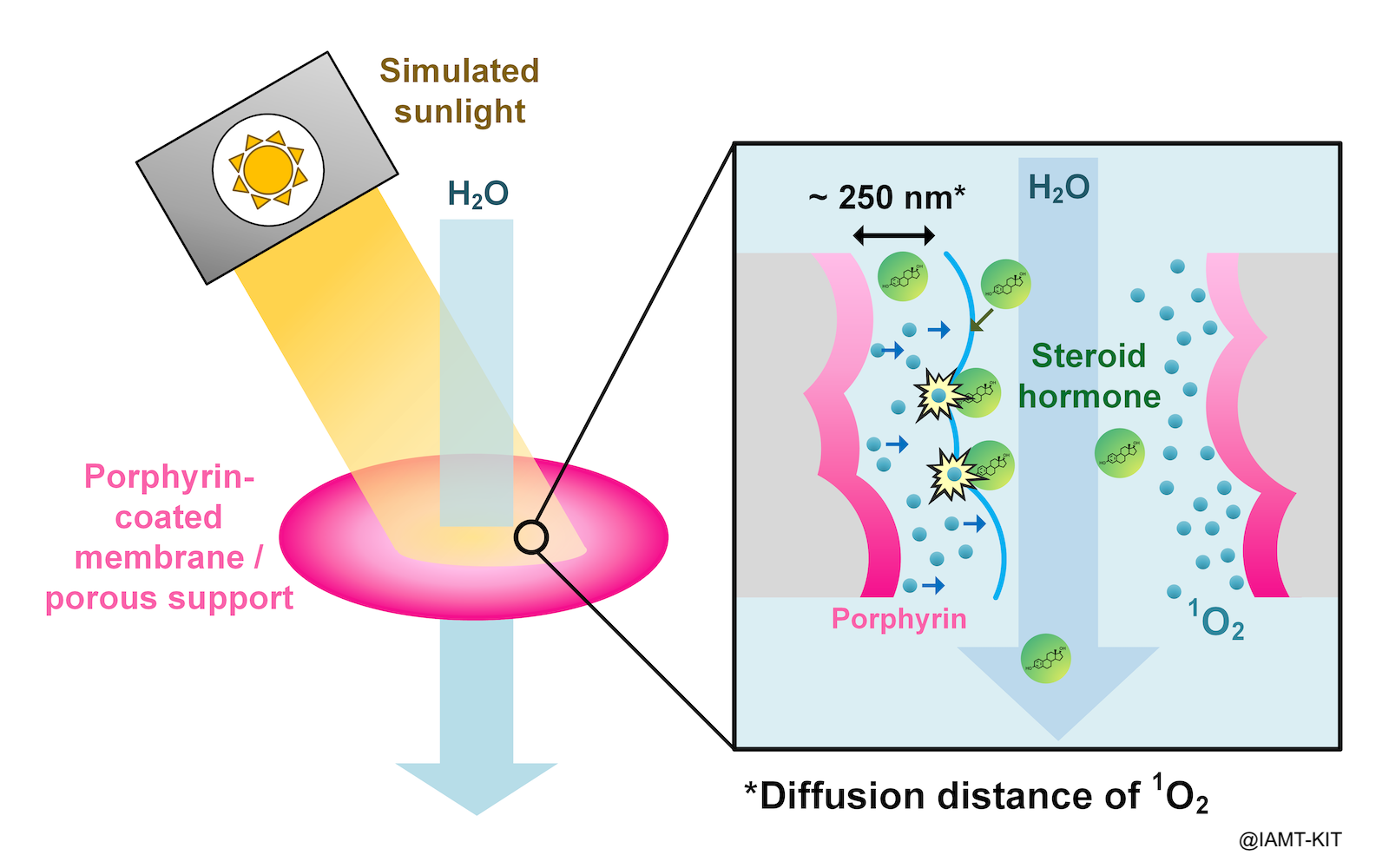
However, in larger pores (100−400 nm in diameter), the majority of micropollutants will not stick to the pore walls but diffuse in all the pore space. If the pores are those of a photocatalytic membrane reactor, the micropollutants can react − in the liquid phase − with reactive species generated at the pore walls. We adapted the century-old collision theory, which states that the rate of reaction is controlled by how easy the two reactants diffuse and collide with each other, to predict the reaction rate in photocatalytic membrane reactors.

Beside the fundamental researches, I have conducted several investigations on the membrane performance with real water matrices, and analytical method development. To view the full list of my publications, click here.

My current research directions

1. Nanofluidic membranes

Membrane technology is well-established; however, commercial state-of-the-art membranes contain both small pores and large pores (and even defects) resulting from sub-optimally controlled fabrication. It is hence difficult to reveal the link between the structure and performance of these membranes.

A number of materials research groups have been able to fabricate alternative membranes that resolve, to some extent, the multi-scale inhomogeneity of commercial membranes. Because such membranes can be procurred via collaborations, this research direction opens up to reveal, through both experimental and molecular dynamics approaches, how solutes (ions and small organic molecules) transport through and interact with the membrane pores.
Direction 1

2. Reactive (photocatalytic) membranes for micropollutant removal

In photocatalytic membrane reactors, the driving force for micropollutant removal is not pressure, but the chemical potential induced at the pore surface and/or inside the pore space. Compared to batch reactors, the photodegradation performance of photocatalytic membrane reactors is better; however, the full potential of these membranes have not been unlocked.

This research direction involves experiments with micropollutant photodegradation in continuous flow. I aim to elucidate the effects of pore adsorption, light penetration, and chemical non-steady-state on micropollutant removal, and how these conditions can be harnessed to improve the photodegradation performance.

Direction 2

3. Structure−performance correlation in membrane processes

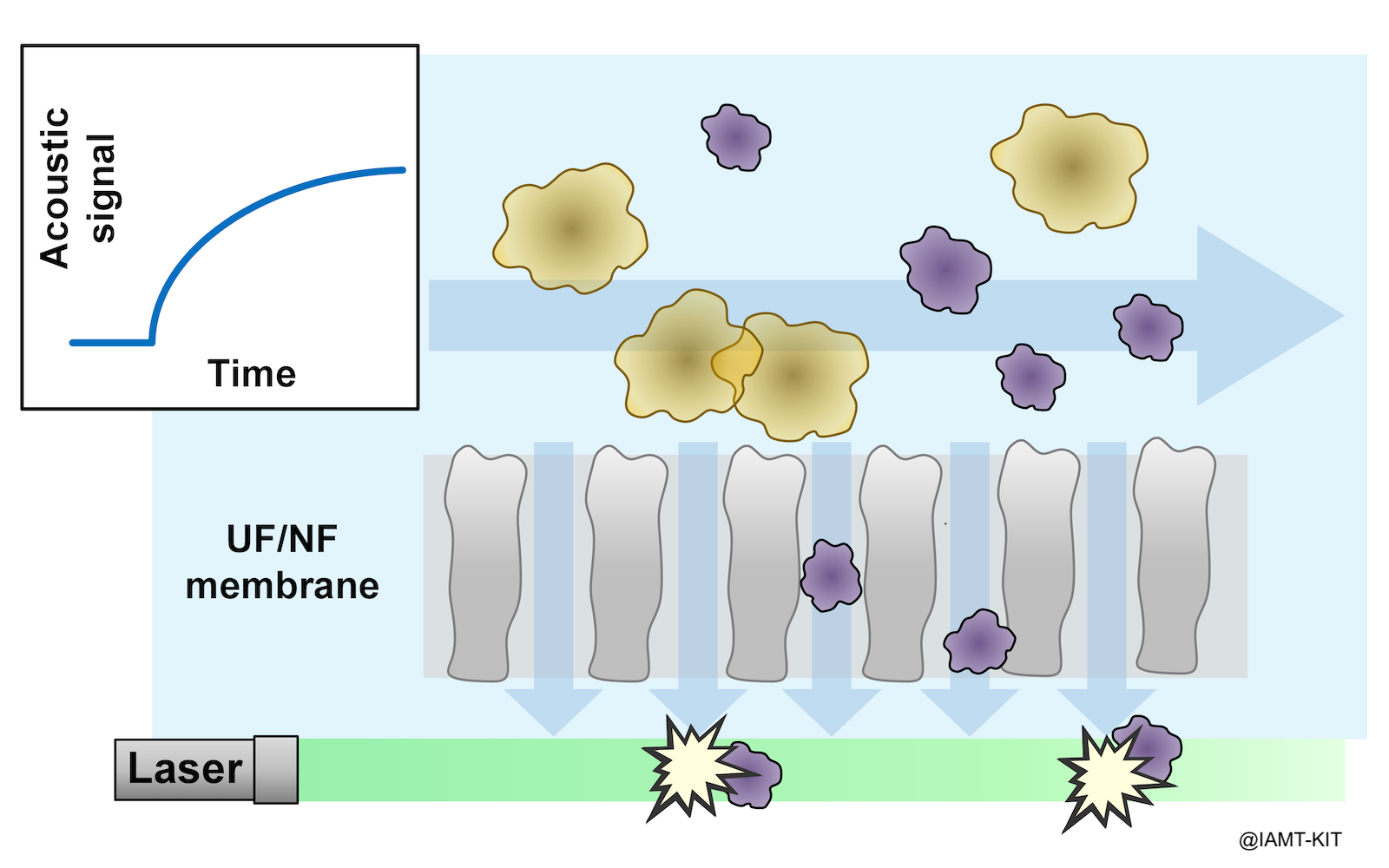
Laser-induced breakdown detection (LIBD) is a robust analytical technique for quantifying nanoparticles and nanoplastics. The availability of the LIBD allows me to design challenge tests with probe nanoparticles, and to look more deeply into the fundamental membrane processes, such as retention, fouling, and deposition−release.

Through this research direction, I aim to reveal the connection between nanoparticle retention and pore size distribution, or the extent of defects, in ultra- and nanofiltration membranes.

Direction 3

My skills

Experimental systems

Analytical techniques

Membrane and nanoparticle characterization techniques

Modelling

Other skills